
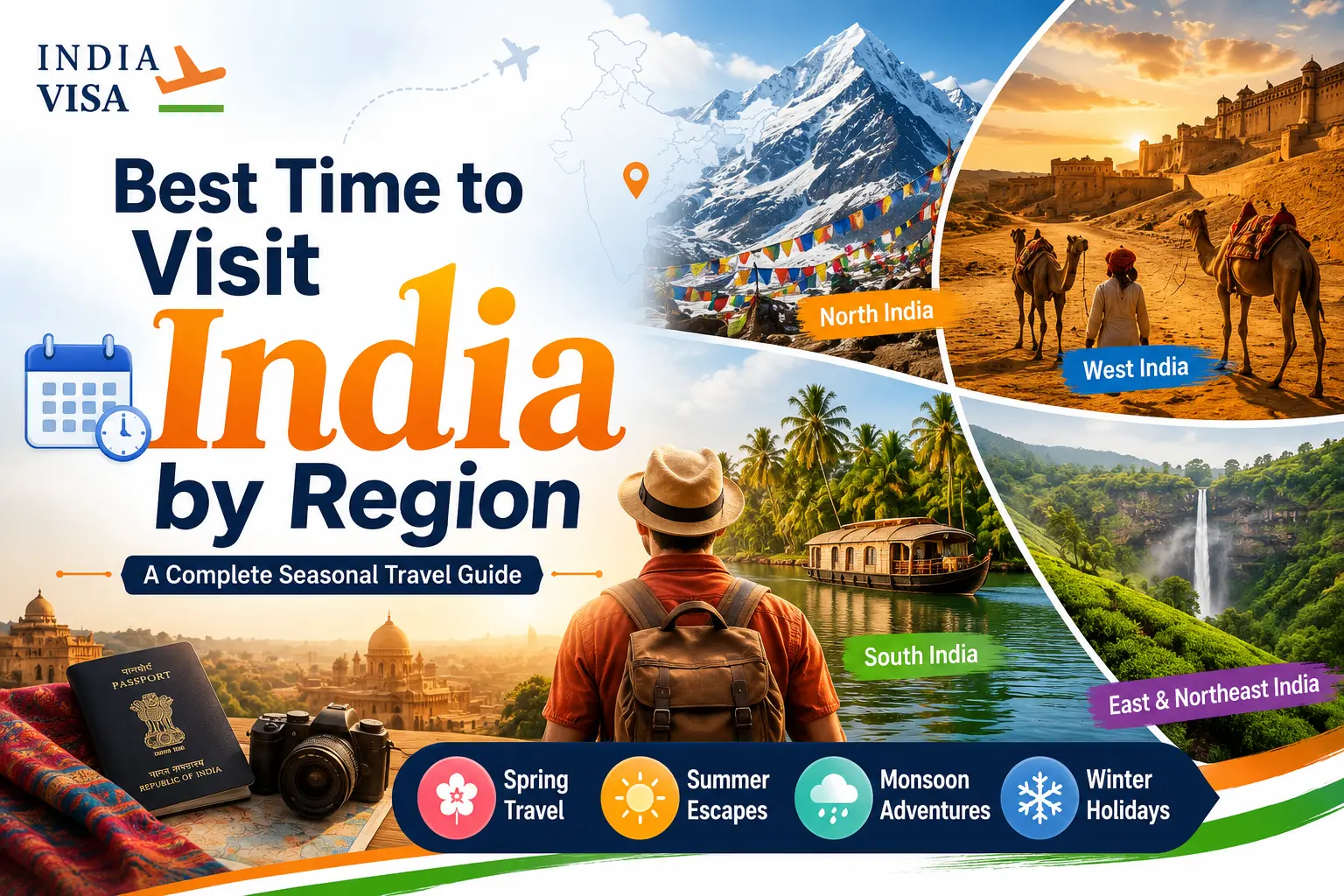
India is a land of incredible diversity, offering everything from snow-covered Himalayan mountains and golden deserts to tropical beaches, lush forests, and vibrant cultural cities. Because of its vast geography, the best time to visit India depends largely on the region you plan to explore.
Whether you're looking to witness the Taj Mahal at sunrise, cruise through Kerala's backwaters, trek in the Himalayas, or relax on Goa's beaches, understanding India's regional climate will help you make the most of your journey.
If you're planning an international trip, don't forget to apply India eVisa online before your departure. Obtaining your India eVisa in advance ensures a smoother travel experience and allows you to focus on enjoying your adventure.
Understanding India's Travel Seasons
India generally experiences four major travel seasons:
- Winter (October to March) – Cool and pleasant weather across most regions.
- Summer (April to June) – Hot in many areas but ideal for mountain destinations.
- Monsoon (June to September) – Lush landscapes and fewer tourists.
- Post-Monsoon (September to November) – Comfortable temperatures and clear skies.
Each season offers unique experiences depending on where you travel.
North India
Best Time: October to March
North India is one of the country's most popular tourist regions, featuring historical monuments, royal cities, wildlife parks, and the majestic Himalayas.
Weather
During winter, temperatures range from 8°C to 25°C in cities like Delhi, Agra, and Jaipur, making sightseeing comfortable.
Mountain destinations such as Shimla, Manali, and Kashmir experience snowfall, attracting winter sports enthusiasts.
Top Places to Visit
- Delhi
- Agra
- Jaipur
- Varanasi
- Amritsar
- Shimla
- Manali
- Kashmir
Why Visit During Winter?
- Pleasant sightseeing weather
- Beautiful Himalayan snow
- Ideal for photography
- Comfortable outdoor activities
South India
Best Time: November to February
South India offers tropical beaches, hill stations, backwaters, ancient temples, and rich cultural experiences.
The cooler winter months provide pleasant temperatures between 20°C and 30°C.
Top Destinations
- Kerala
- Goa
- Bengaluru
- Mysuru
- Chennai
- Hampi
- Coorg
- Ooty
Highlights
- Houseboat cruises in Kerala
- Goa beach vacations
- Ayurveda wellness retreats
- Coffee plantation tours
West India
Best Time: October to February
Western India combines deserts, beaches, modern cities, and heritage architecture.
Popular Destinations
- Mumbai
- Udaipur
- Jodhpur
- Jaisalmer
- Mount Abu
- Ahmedabad
- Rann of Kutch
Winter offers ideal temperatures for desert safaris and city exploration.
Seasonal Attractions
- Camel safaris
- Desert camping
- White Rann Festival
- Heritage palace tours
East India
Best Time: October to March
Eastern India features colonial architecture, tea gardens, temples, and coastal attractions.
Best Places
- Kolkata
- Bhubaneswar
- Puri
- Konark
- Darjeeling
Visitors enjoy comfortable weather and several cultural festivals during this period.
Northeast India
Best Time: October to April
Known for untouched natural beauty, Northeast India offers waterfalls, mountains, wildlife, and tribal culture.
Must-Visit States
- Meghalaya
- Assam
- Arunachal Pradesh
- Nagaland
- Sikkim
- Mizoram
Activities
- Trekking
- Tea garden tours
- River cruises
- Living root bridge exploration
Winter and spring provide clear skies and excellent road conditions.
Central India
Best Time: October to March
Central India is famous for wildlife safaris, ancient temples, and UNESCO World Heritage Sites.
Popular Destinations
- Khajuraho
- Bandhavgarh National Park
- Kanha National Park
- Pachmarhi
Wildlife enthusiasts often visit during winter when animal sightings are more frequent.
India by Season
Winter (October–March)
Winter is considered the best overall season to visit India.
Perfect for:
- Historical sightseeing
- Wildlife safaris
- Desert tours
- Cultural festivals
- Beach vacations
Average temperature ranges between 10°C and 28°C in most tourist destinations.
Summer (April–June)
Summer can be extremely hot in northern and central India.
However, it is the perfect time to visit:
- Ladakh
- Himachal Pradesh
- Uttarakhand
- Kashmir
- Sikkim
These mountain regions offer cool temperatures and breathtaking scenery.
Monsoon (June–September)
Although many travelers avoid monsoon, it transforms India into a lush green paradise.
Ideal destinations include:
- Kerala
- Western Ghats
- Coorg
- Munnar
- Valley of Flowers
Monsoon also means fewer crowds and lower hotel prices.
Post-Monsoon (September–November)
This season offers fresh landscapes and comfortable temperatures.
It is one of the best times for:
- Photography
- Road trips
- Trekking
- Wildlife tourism
Major Festivals Worth Planning Around
India's festivals provide unforgettable cultural experiences.
January
- Makar Sankranti
- Pongal
March
- Holi
April
- Baisakhi
August
- Onam
October–November
- Navratri
- Durga Puja
- Diwali
Many travelers schedule their visits around these celebrations for a richer cultural experience.
Tips for Planning Your India Trip
Before traveling:
- Check the weather for your chosen region.
- Book flights and hotels early during peak season.
- Pack clothing suitable for regional climates.
- Carry comfortable walking shoes.
- Keep digital and printed travel documents ready.
International visitors should also apply India eVisa online well before departure. Applying early helps avoid last-minute issues and gives you enough time to receive your travel authorization.
Why an India eVisa Makes Travel Easier
Eligible travelers can apply India visa online without visiting an embassy or consulate.
Benefits include:
- Fully online application process
- Faster processing
- Convenient document submission
- Multiple visa categories
- Simplified travel planning
Having your approved India eVisa before departure allows you to focus on enjoying your trip rather than worrying about paperwork.
Conclusion
India's diverse geography means there is never a bad time to visit—only the best time for the region you want to explore. From the snow-capped peaks of the Himalayas and the colorful deserts of Rajasthan to Kerala's serene backwaters and Goa's sun-kissed beaches, every season brings unique experiences. Before you begin your journey, remember to apply India eVisa online to ensure a hassle-free arrival. With your travel documents ready and the right season chosen, you'll be well-prepared to experience the incredible landscapes, cultures, festivals, and hospitality that make India one of the world's most unforgettable travel destinations.


