
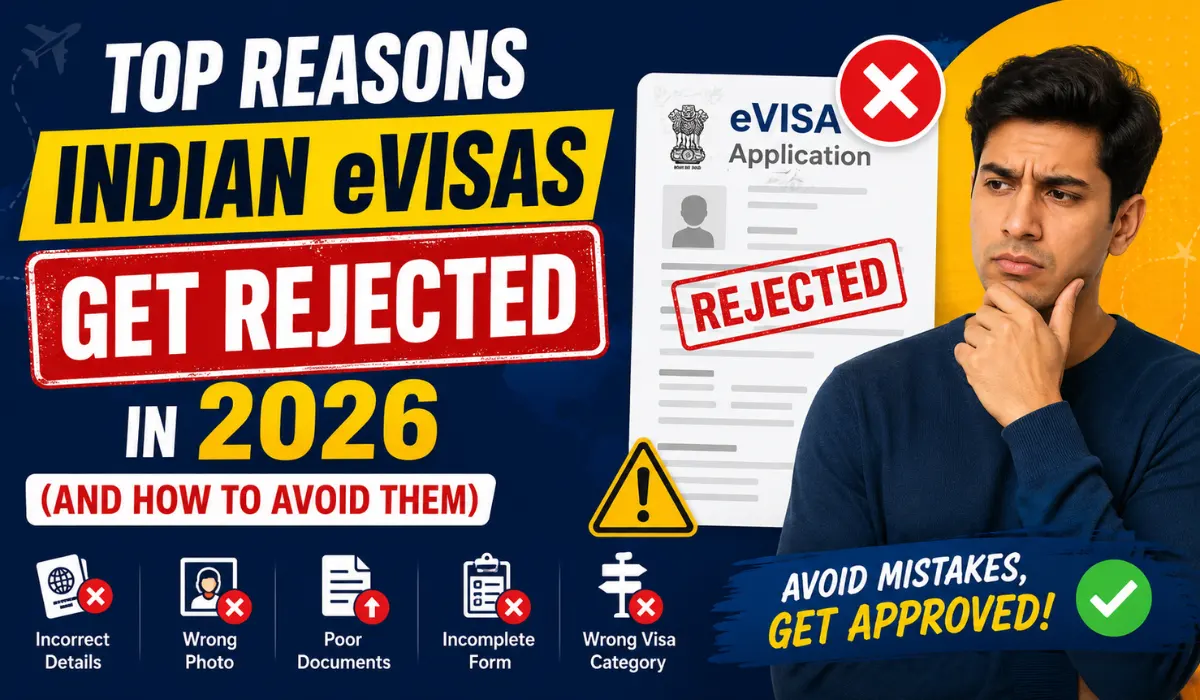
Applying for an Indian eVisa is usually a straightforward process, but many travelers still face delays, refusals, or application issues because of avoidable mistakes. Understanding the most common Indian eVisa rejection reasons can help applicants complete the process correctly and improve their chances of approval.
Thousands of travelers apply for India visa online every year for tourism, business meetings, medical treatment, conferences, and family visits. However, even small errors in the application can lead to Indian visa refusal or delays in processing.
In this guide, we explain the top Indian eVisa rejection reasons in 2026, how to avoid common application mistakes, and what travelers should do if their Indian eVisa is denied.
Why Indian eVisa Applications Get Rejected
The Indian visa process requires applicants to provide accurate information, valid documents, and proper supporting files. Immigration authorities carefully review all applications before issuing approval.
Most India eVisa rejection cases happen because of:
- Incorrect passport details
- Poor document uploads
- Incomplete forms
- Invalid photographs
- Wrong visa category selection
Understanding these problems before applying can significantly reduce the risk of Indian visa refusal.
1. Incorrect Passport Information
One of the most common Indian eVisa rejection reasons is entering incorrect passport details during the application process.
Applicants often make mistakes such as:
- Wrong passport number
- Incorrect name spelling
- Invalid date of birth
- Passport expiry errors
Even a minor mismatch between the passport and the India visa online application can result in rejection.
How to Avoid This Mistake
- Enter details exactly as shown on the passport
- Double-check every field before submission
- Avoid typing errors or missing middle names
Your passport should also remain valid for at least six months from your arrival date in India.
2. Poor Quality Passport Scan
Another major reason why an Indian visa gets rejected is uploading unclear or incomplete passport scans.
Common problems include:
- Blurry images
- Cropped passport pages
- Dark or unreadable scans
- Low-resolution uploads
Immigration officers must clearly verify your identity and passport information.
Tips for Proper Passport Upload
- Use high-quality scans
- Ensure all passport corners are visible
- Avoid shadows or reflections
- Upload files in the required format
Clear documents help speed up the Indian visa process and reduce delays.
3. Incorrect Visa Photograph
Photo-related issues are among the leading Indian eVisa rejection reasons.
Applicants frequently upload:
- Selfies
- Blurry photos
- Photos with backgrounds not allowed
- Incorrect image sizes
- Photos with sunglasses or shadows
The Indian eVisa application has strict photo requirements that must be followed carefully.
Photo Guidelines
- Use a recent passport-style photograph
- Maintain a plain white background
- Keep the face fully visible
- Avoid filters or heavy editing
A proper photo increases approval chances during the India eVisa application review.
4. Selecting the Wrong Visa Type
Many travelers apply under the wrong visa category, which can lead to Indian visa refusal.
For example:
- Using a tourist visa for business activities
- Applying for a business visa instead of a conference visa
- Choosing the wrong medical visa category
The Indian government reviews the travel purpose carefully.
Common Indian eVisa Categories
- Indian Tourist eVisa
- Indian Business eVisa
- Indian Medical eVisa
- Medical Attendant Visa
Choosing the correct visa category is essential for successful approval.
5. Incomplete Application Form
An incomplete India visa online form can result in immediate delays or rejection.
Applicants sometimes forget to:
- Fill mandatory sections
- Add travel information
- Upload supporting documents
- Provide complete address details
Missing information creates complications during verification.
How to Avoid Incomplete Applications
- Review the form before submission
- Check uploaded documents carefully
- Confirm travel details are accurate
Careful review helps avoid unnecessary India eVisa rejection issues.
6. Criminal Background or Immigration Violations
Applicants with serious criminal records or previous immigration violations may face difficulties during the Indian visa process.
Potential issues include:
- Previous deportation
- Overstaying earlier visas
- Fraudulent applications
- Criminal convictions
Immigration authorities may reject applications if they identify security concerns.
7. Applying Too Late Before Travel
Some travelers apply only a few days before departure and face delays in approval.
Although many applications are processed quickly, urgent Indian visa processing is not guaranteed in every case.
Delays may happen because of:
- High travel demand
- Additional verification
- Public holidays
- Incorrect documents
Best Time to Apply
Travelers should apply several days or weeks before their planned travel date whenever possible.
8. Using Expired or Damaged Passports
An expired or damaged passport is another important Indian eVisa rejection reason.
Applications may be denied if:
- Passport validity is too short
- Passport pages are damaged
- Passport information is unreadable
Always renew your passport before starting the India visa online application.
9. Multiple Applications Submitted
Submitting multiple applications for the same trip can create confusion and delays.
Some applicants:
- Submit duplicate applications
- Make repeated payments
- Apply again before receiving updates
This may trigger additional review by immigration authorities.
Recommended Approach
- Submit only one correct application
- Wait for official updates
- Contact support if necessary
What to Do If Your Indian eVisa Is Rejected
If your Indian eVisa denied status appears, do not panic. In many cases, travelers can reapply after correcting mistakes.
Steps to Take
- Review the rejection reason carefully
- Correct any document or information errors
- Prepare updated files
- Submit a fresh application if eligible
Many India eVisa rejection cases are successfully resolved through proper reapplication.
Tips to Avoid Indian eVisa Rejection in 2026
To improve approval chances:
- Use accurate passport details
- Upload clear documents
- Follow photo requirements carefully
- Select the correct visa category
- Apply early before travel Review the form multiple times
Simple preparation can help travelers avoid Indian visa mistakes and complete the process smoothly.
Final Thoughts
Understanding the top Indian eVisa rejection reasons is important for anyone planning to visit India in 2026. Most Indian visa refusal cases happen because of avoidable errors such as incorrect passport information, invalid photographs, incomplete applications, or selecting the wrong visa category. By carefully following the Indian visa process, preparing proper documents, and reviewing the India visa online form before submission, travelers can greatly improve their chances of approval.
Whether you are applying for an Indian tourist visa, business visa, or medical visa, accuracy and preparation remain the key to a successful Indian eVisa application.


